For many of us, the idea of life on the road calls to mind a diesel engine thundering along twisting lanes. Yet one couple’s 54-day tour of South Australia and Tasmania turns that image on its head, swapping fossil fuel for electrons and engine growl for a barely-there hum. Their tale is less about the destinations than the manner of travel.
Rethinking the road-trip set-up
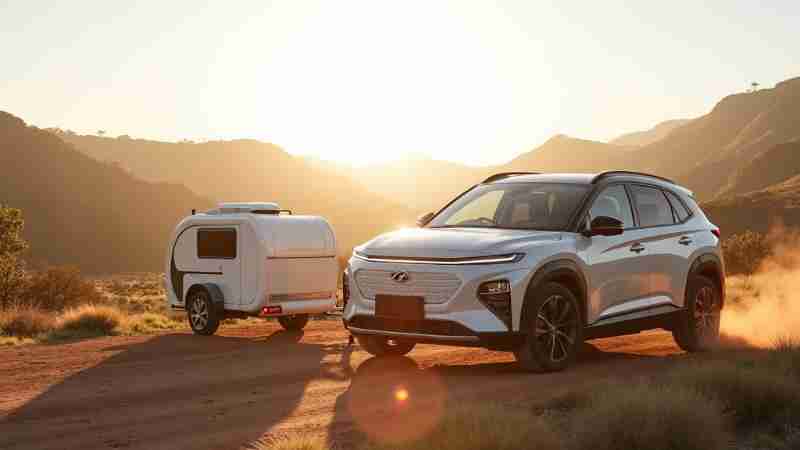
Having parted company with their Ford Ranger Wildtrak pick-up, the pair opted for something altogether different: a 2022 Hyundai Ioniq 5, a fully electric SUV. This wasn’t some last-minute caper—every detail was mapped out to balance comfort, sustainability and the changing face of life on the road.
With a 550-kg custom-built trailer in tow—sporting a gull-wing lid for shelter from the rain, a 95-litre fridge and all the kit needed for a cracking break—they notched up 5,710 kilometres. The whole set-up was more than mere transport; it was a home on wheels.
The trailer doubled as their base during week-long private stops around Tasmania, neatly unhitched so the EV could nip off on day trips unburdened. The arrangement married practicality with unexpected comfort—not to mention some cracking views.
Charged Up and Ready: EV Travel Without Compromise
And the biggest surprise? Charging wasn’t the faff most people imagine. Even with a 20–35 per cent dip in range while towing, the Ioniq 5 took it all in its stride. Tasmania’s swiftly growing charging network turned out to be not merely adequate but genuinely impressive. Across 21 top-ups they spent just £345.05—only a fraction of what they’d have shelled out for petrol.
Their takeaway is straightforward: life on the road doesn’t need a roaring engine to feel adventurous. The hush of an EV, its clever efficiency and its lighter running costs could usher in a new golden age for Britons hankering after the open road.
